Friday, August 31, 2018

Event control in Verilog

Requirement::
- Synchronization and Communication mechanism are essential to control the interaction between two processes.

Application:
- Last packet received, trigger the event to check update of status register value.
- Specific type packet received repeatedly based on that sample value for coverage.
Analogy:
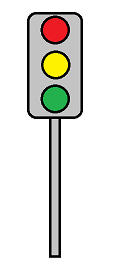
- Traffic signal is the best example to explain event. Multiple vehicles are moving on the road. Now, to avoid accident traffic management system is required. So, need to block one root of the vehicles for certain time period. And later unblock the same and block the another root. Consider the traffic signal that block the vehicles for certain period of time. When timer is completed, signal will Unblock the vehicles.


USER WANT CODE:

module traffic_system;
event green_light; // to activate green light
initial
begin
  #20; // block the traffic
  ->green_light; // trigger event
  #10; // Unblock traffic
  $display(" green_light is asserted at %t ",$time);
end

always

begin
  #10;
  if(green_light.triggered) // check traffic status
    $display(" green_light is activated at %t",$time);
  else
    $display(" green_light is Not activated at %t",$time);
end

initial

#100 $finish;

endmodule


To run simulation click on below link:
Link: https://www.edaplayground.com/x/4Hny

Sunday, July 29, 2018

Semaphore

Requirement:
While developing testbench, it is required to process the data between to separate entity. In Verilog provides the option of "event" but, that is a static object. Verilog language does not have the ability to create the dynamic event. Semaphore is the built-in class to use for synchronization.

Application:
Consider two threads are ongoing parallel. Now need to control this two thread. While the First thread is ongoing second thread need to wait to complete the operation of the Fist thread. Similarly, when the second thread is ongoing, First thread need to wait to complete the process for the Second thread.

Analogy:

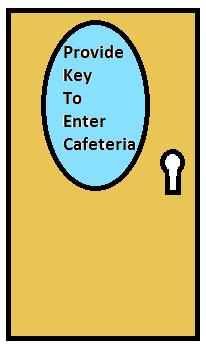
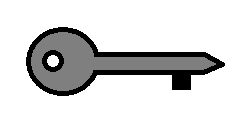
Consider in the cafeteria where a limited number of chairs are available. Need to manage the arrangement of the cafeteria. The only Premium customer can use the cafeteria. So, every time when the customer enters the cafeteria key is provided to it. Similarly, while leaving the customer drop the key in the box.When there is no keys are available means all the chairs are occupied.
No place to sit in the cafeteria.


Similarly, the semaphore is like a cafeteria, the process is like the customer and key is like the chair. While constructing the semaphore user will decide the size of the semaphore means the number of chairs. When process start simulation semaphore provides the key to it. Once all the keys are occupied means semaphore is full. Once process will complete it drop the key indicate space is again created in semaphore.


USER WANT CODE:

program semaphore_example();
semaphore cafeteria;

task provide_chair(int addr, int data);

  $display("Taking FOOD addr %d", addr);
  #10;// do some operation
endtask

int done = 0, i = 0;

initial
 begin
  // here we initialize the semaphore with one token
  cafeteria = new(1);
  fork
  begin
   // here is one parallel thread competing
    while(!done)
    begin
      // wait for some random time
      $display("First customer is waiting to get the chair");
      #($random() % 100);
      // attempt to get the one semaphore token
      cafeteria.get(1);
      // got it!, lets use the bus
      $display("First customer got the chair");
      provide_chair(200, $random());
      i++;
      // we must return the semaphore token
      cafeteria.put(1); 
      $display("First customer drop the chair"); 
    end
  end
  begin
    // here is second parallel thread competing
    while(!done)
    begin
      // wait for some random time
      $display("Second customer is waiting to get the chair");
      #($random() % 100);
      // attempt to get the one semaphore token
      cafeteria.get(1);
      $display("Second customer got the chair");   
      provide_chair(200, $random());
      i++;
      // we must return the semaphore token
      cafeteria.put(1);
      $display("Second customer drop the chair");         
    end
  end

  // here is a another parallel thread

  // this is to decide close the cafeteria
  begin
    while(!done)
    begin
      @(i);
      if (i > 10)
      done = 1;
    end
  end
  join
  $display ("done -- out\n");
 end
endprogram

To run simulation click on below link.
Link: https://www.edaplayground.com/x/5nkS

Saturday, June 23, 2018

Major advantage of function over task

The function can return the value and task cannot return the value.

What is the return value?
The user called the method, it will execute lines of code.
On completion of method definition method return some value.

How can the function return value?
The return type should be mention in the function definition. Need to use of return keyword.

What is advantage/application to return value?
Many times a user needs to use the same condition multiple times.

Can function return 'x' or 'z'?
- Yes, function can return 'x' or 'z', need to use logic return type in function.

What is preferable task or function?
- Depends on the application user will decide to use task or function.


USER WANT CODE:

function logic hello(bit x);
$display("This is Hello function");
if(x == 1)
begin
  return 1'hz; // return 'z' or 'x' state
end
endfunction


task Hi();
//##1;
int a;
a = 1;
$display("This is Hi task");
hello(a);
endtask


module top();
logic a;
initial
begin
Hi();
a = 1;
if(hello(a) === 1'hz) // '===' require for z or x comparison
begin
  $display("I am good");
end
else
begin
  $display("Good bye");
end
end

endmodule